
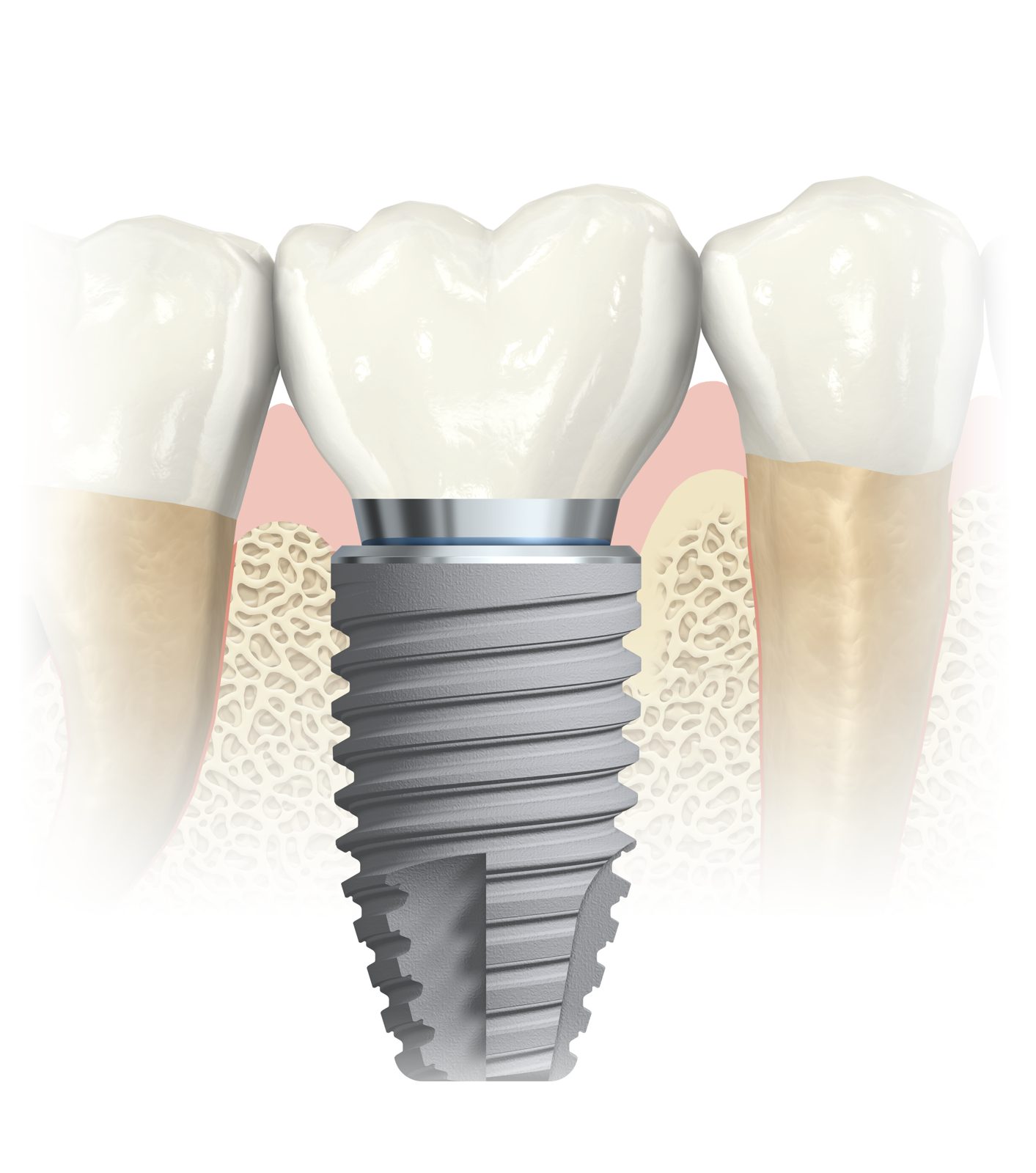
Every extraction starts a process of bone remodelling that can make later implant placement harder. Socket grafting – also called alveolar ridge preservation – aims to limit that loss so that an implant can be placed in the right position without major grafting later. It is one of the most useful procedures a general dentist can add, and it is often the first grafting technique dentists learn.
What happens to the ridge after extraction?
After a tooth is removed, the bundle bone that supported it resorbs and the ridge remodels. The buccal wall, which is often thin, is particularly affected, so the ridge loses more width than height and shifts palatally or lingually. Systematic reviews of untreated sockets have reported average losses of several millimetres of width and over a millimetre of height within the first six months, with most of the change happening early. In the aesthetic zone, or where the ridge was thin to begin with, that can be the difference between a straightforward implant and one that needs significant bone augmentation.
When should you consider socket grafting?
- When an implant is planned but immediate placement is not suitable – for example because of infection, lack of primary stability or patient circumstances.
- When the buccal plate is thin or damaged, especially in the aesthetic zone.
- Near the maxillary sinus, to help preserve height for later implant placement.
- When the patient has not yet decided on treatment and you want to keep their options open.
The basic principles
Techniques vary, but successful ridge preservation generally relies on the same steps:
- Atraumatic extraction – sectioning teeth and using periotomes or luxators to protect the socket walls, especially the buccal plate.
- Thorough debridement of granulation tissue and assessment of the socket walls.
- Grafting the socket with a slowly resorbing material, such as a xenograft or allograft, to maintain the space.
- Sealing the socket – with a membrane, collagen matrix or soft tissue graft – to contain the graft and allow soft tissue healing.
- Allowing healing before implant placement, typically several months, guided by a review CBCT.
Socket grafting reduces ridge loss but does not stop it completely, and results depend heavily on technique. That is why it is worth learning a predictable, well-documented protocol rather than simply filling sockets with graft material.
Dr David Guy’s three-layer protocol
Between 2010 and 2012 Dr David Guy, Principal of Guy’s College, developed a three-layer protocol for alveolar ridge augmentation (socket grafting), which has since become widely used. A study of the technique demonstrated bone volume preservation of between 95% and 105%. Predictable socket grafting is part of the bone grafting teaching on our courses.
Learning socket grafting and bone augmentation
Basic bone grafting is part of our Certificate in Implant Dentistry, alongside implant planning, surgery and restoration, with live patient experience at 18 Wimpole Street, London. The Certificate in Advanced Implant Dentistry then spends two days on advanced bone grafting – onlay block grafting, ridge splitting, simultaneous grafting, membrane fixation and predictable socket grafting – and two days on sinus grafting.
New to implants? Read our step-by-step guide to starting implant dentistry as a general dentist.